
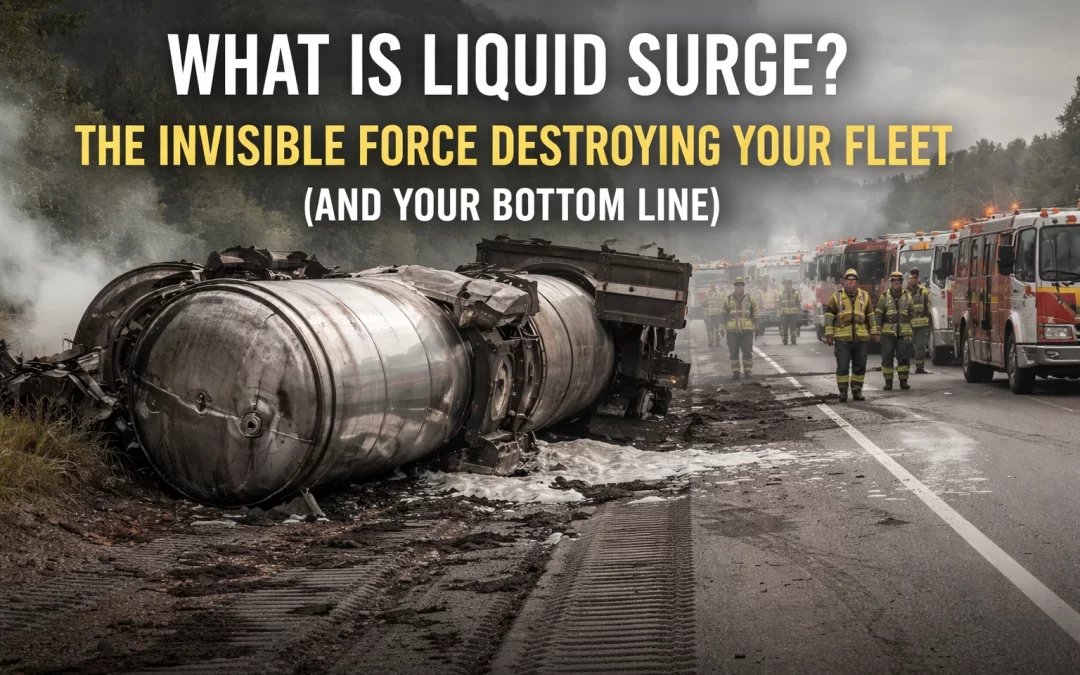
Every fleet manager knows the numbers. Over 1,300 cargo tank rollover accidents happen every year. What most don't know is that 94% of those rollovers occur with partially loaded tanks.
Not overloaded. Not speeding. Partially loaded.
The culprit? An invisible force that's been destroying fleets since the first liquid was loaded onto a tank truck: liquid surge.
You can't see it from the outside. Your drivers feel it: that unsettling push and pull that makes a rig want to go somewhere the steering wheel isn't pointed. But by the time you see surge in the accident report, it's already cost you a truck, a driver's confidence, a chunk of your insurance premium, and too often, tragically, much more.
Let's break down what's actually happening inside that tank, because understanding surge is the first step to killing it.
The Physics Nobody Explains
Here's how most people picture liquid surge: the truck brakes, the liquid sloshes forward, and it pushes the cab. Simple, right?
Wrong.
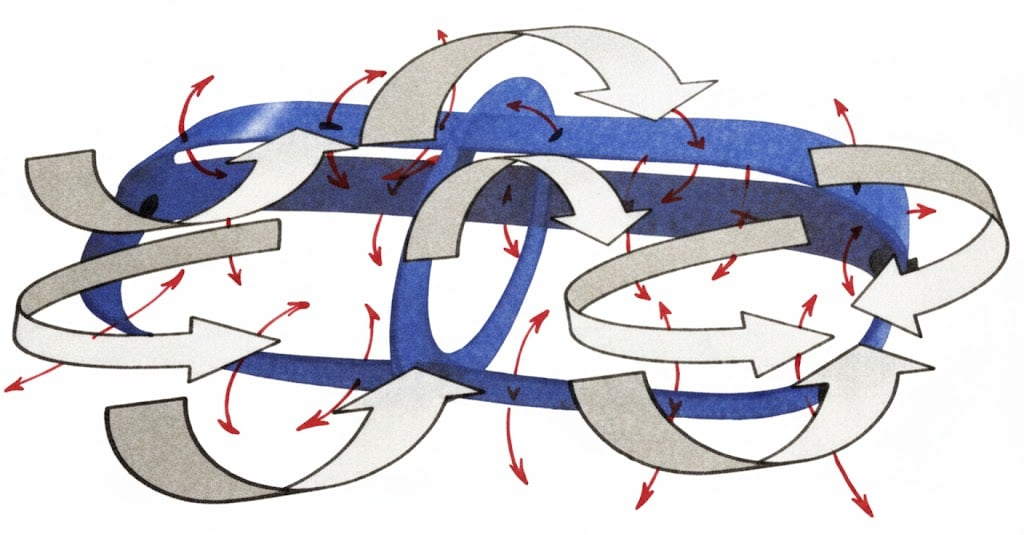
That's only a fraction of the story. Liquid surge isn't a back-and-forth problem. It's a multi-directional nightmare.
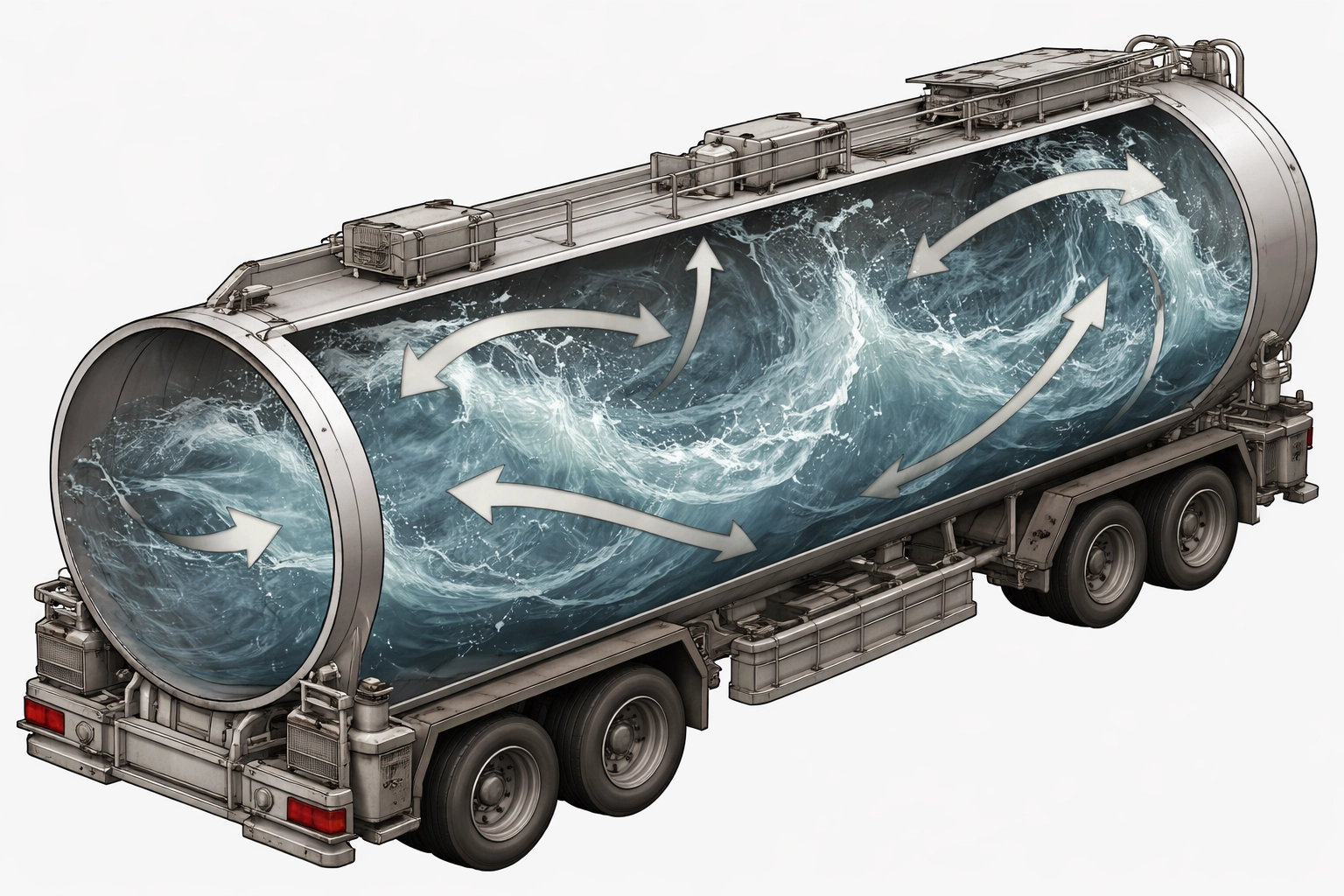
When a driver brakes, the liquid moves forward. But it doesn't just stop at the front wall. It climbs. It rebounds. It creates secondary waves that move sideways, diagonally, and in circular patterns depending on the tank's shape and fill level. Energy moves 360 degrees in every direction.
Now add a lane change. A curve. A pothole. A driver that cuts you off. Each input creates a new wave pattern that collides with the existing ones. Inside that tank, you've got chaos: thousands of pounds of liquid moving in every direction at once.
And here's the part that keeps fleet managers up at night: once the liquid is moving, the driver has very little control over any of it.
The steering wheel controls the tires. The brakes control the wheels. But nothing controls the liquid. It does whatever physics tells it to do. And physics doesn't care about your delivery schedule, your safety, other drivers on the road, or anything else.
Why Partial Loads Are the Real Killer
A full tank is heavy, but it's predictable. The liquid has nowhere to go. An empty tank is light and stable. But a partially filled tank: that's where surge becomes deadly.
Think about it: the liquid needs room to move. The more room it has, the more momentum and energy it builds. At 50% capacity, that liquid can generate enough force to push a stationary truck into an intersection on a slick road.
Drivers have to balance:
- Legal weight limits (can't overload)
- Liquid expansion during transit (can't fill to the brim)
- Delivery requirements (partial loads are a reality)
Some tanks end up hauling partial loads constantly. And every single one of those loads is a surge event waiting to happen.
The Invisible Costs You're Already Paying
Here's where it gets expensive: and where most fleet managers miss the full picture.
Surge doesn't just cause rollovers. It causes everything else that drains your budget month after month.
Higher Insurance Premiums
Insurance companies aren't stupid. They know tanker fleets have higher claim rates. Every rollover, every fender bender caused by a driver overcorrecting for surge: it all shows up in your loss runs. And your premiums climb.
You might not connect that 8% rate increase to surge. But the actuaries do.
Driver Turnover
Driving a tanker is already one of the hardest jobs on the road. Add in the constant fight against surge, and you've got drivers who burn out fast.
The good ones leave for dry freight. The ones who stay get tired, make mistakes, and cost you more in the long run. Recruiting and training replacements? That's $8,000 to $12,000 per driver, minimum.
Surge isn't just a safety problem. It's a retention problem.
Constant Equipment Repairs
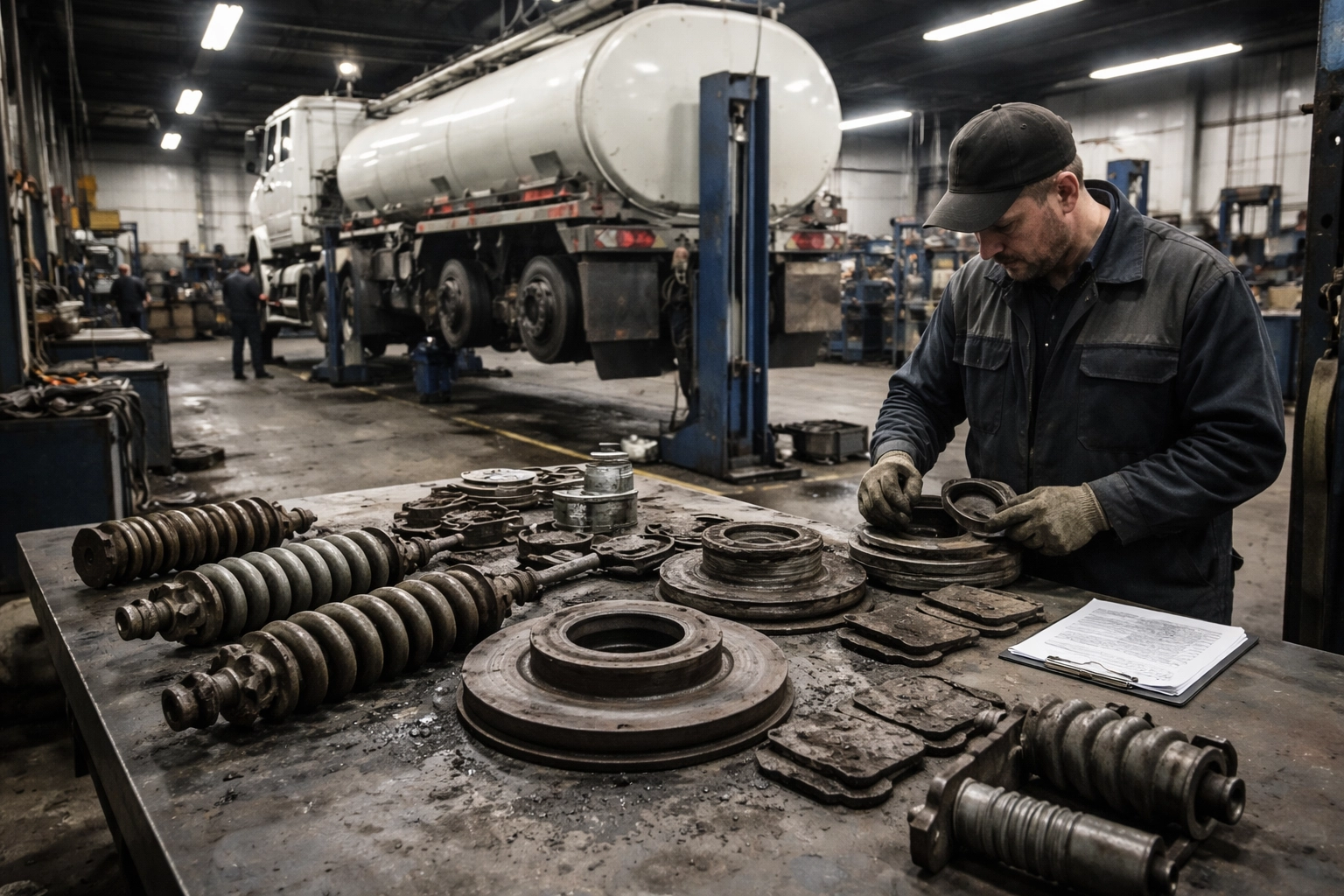
Every time that liquid slams into the tank wall, it transfers energy. That energy has to go somewhere. It goes into:
- Tank walls and welded-in baffles (stress fractures, weld failures)
- Suspension components (shocks, springs, axles)
- Brakes (premature wear from fighting the push)
- Engine, transmission and drivetrain components (stress from sudden load shifts)
You're replacing parts more often than you should. Your maintenance team knows it. They just might not know why. Or they think it's the cost of doing business with tankers. Not necessarily.
The answer is surge. It's been beating up your equipment since day one.
Excessive Fuel Use
Hauling moving liquid requires more energy - fuel. This is particularly true when driving on twisting, turning mountainous roads. Likewise, when a driver senses that the load is unstable, greater caution and slower driving speeds are required. When the load is stable, like a full tank truck, faster diving speeds are safe.
Tame the energy in the tank and reduce fuel costs - dramatically.
Why Traditional Baffles Don't Solve the Problem
Tanks often come with welded baffles. Metal plates with holes that are supposed to slow down the liquid.
And they do: sort of.
Baffles reduce front-to-back surge. But remember what we said earlier: surge isn't just front-to-back. It's multi-directional.
Baffles don't stop:
- Vertical wave action
- Lateral sloshing during turns
- Diagonal rebound patterns
- Circular motion in cylindrical tanks
They also transfer energy instead of eliminating it. The liquid hits the baffle, and that force goes straight into the tank wall: then into the chassis, then into the driver's hands on the wheel.
The energy doesn't disappear. It just moves.
That's why drivers still feel surge in baffled tanks. That's why rollovers still happen. The baffle is a speed bump, not a solution.
How Surge Busters Kill 96% of That Energy
This is where things change.
Surge Busters take a completely different approach. Instead of trying to block the liquid, they move with it: and neutralize the energy at the source.
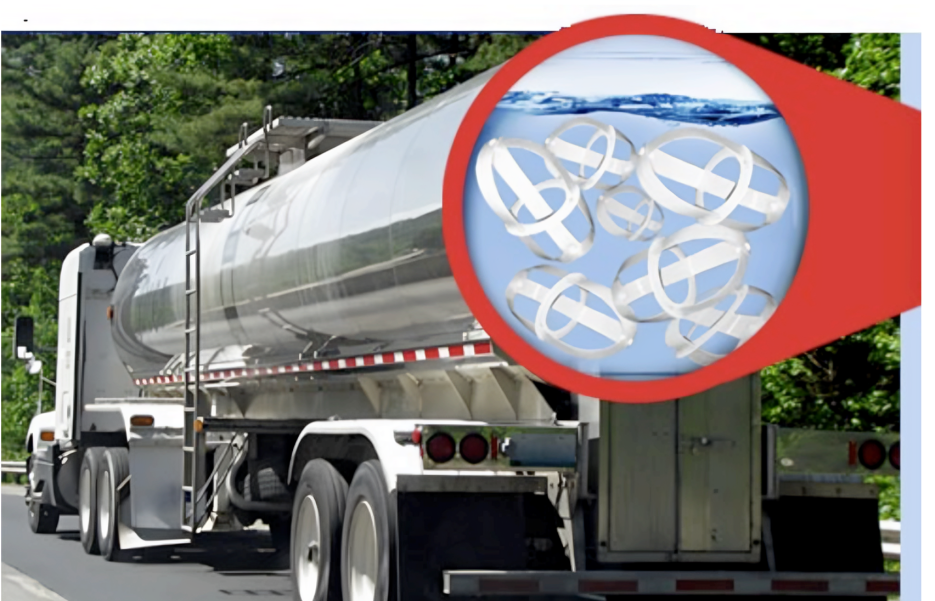
Surge Busters are hollow, slotted polypropylene spheres that float freely in the liquid. When surge happens, they absorb and dissipate that energy in every direction: not just front-to-back.
The result: up to 96% reduction in surge energy.
That's not marketing speak. That's physics. Less energy in the tank means:
- Less force transferred to the chassis
- Less strain on suspension and brakes
- Less driver fatigue from fighting the wheel
- Fewer rollovers, period
And because Surge Busters are drop-in devices, you don't need to weld anything. You don't need to modify your tank. You add them to your existing fleet and start seeing results immediately.
If you switch out a current tank for another one, just transfer the Surge Busters - It's that easy.
The Bottom Line for Fleet Managers
Liquid surge is invisible, but the damage it causes isn't.
You see it in your insurance bills. You see it in your turnover rates. You see it in your maintenance logs. In really serious cases, liquid surge send you to a courtroom. You just might not have connected the dots until now.
The physics are simple: partially loaded tanks create surge. Surge creates energy. Energy destroys equipment, endangers drivers, and drains your budget.
Traditional baffles slow it down. Surge Busters eliminate it.
If you're tired of paying for a problem you can't see, it's time to kill the surge at the source.