

Are You Driving Around with a Ticking Time Bomb?
The Danger →
What It Costs →
Transporting Liquid Loads is Dangerous
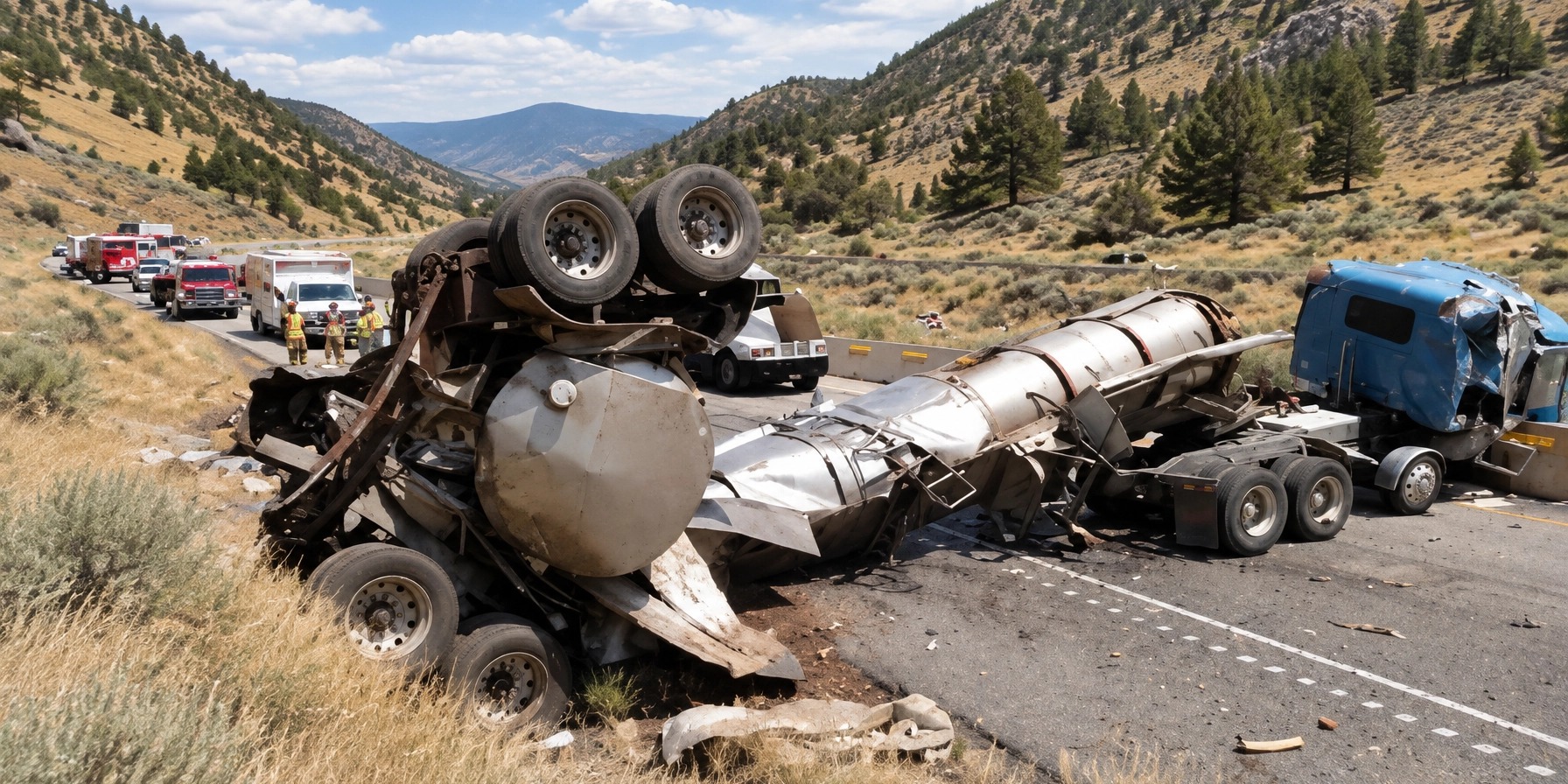
Liquid Surge is a dangerous, constant threat when transporting liquid loads. In the FMCSA's 2007 Cargo Tank Roll Stability Study, between 71% and 94% of cargo tank rollovers, depending on the dataset, involved a tank that was at least partly loaded (more than 20% full)2.
FMCSA, Cargo Tank Roll Stability Study, 2007Rollovers get the attention, but they're not the whole picture. In fatal cargo tank crashes of any kind, only 26.5% involve a rollover at all (FMCSA, 2007)2: the other 73.5% are other kinds of crashes, such as collisions and run-off-road events, where surge force is still very much in play. Surge doesn't only matter when a truck rolls over. It's part of every one of those crashes too, adding destructive force on top of whatever else is already going wrong.
FMCSA/UMTRI, TIFA data, Cargo Tank Roll Stability Study, 2007Those are industry-wide numbers. If you want to see how big the force actually gets for your specific trucks and liquids, that's a two-minute question away.
Unpredictable Driving Conditions
Most people assume there's little to be done about surge itself beyond training drivers to drive carefully. But driving conditions aren't consistent. You can't control black ice, a sudden downpour, an animal in the road, debris that wasn't there a minute ago, or another vehicle that cuts in front of you or brakes hard. Any one of them can force a swerve or a hard stop that sends a wall of liquid slamming forward, or forward and sideways at once when swerving.
Off-Loading the Risk
Most businesses don't solve the surge problem: they off-load it onto their drivers, asking them to manage through attention and reflexes what equipment should have handled before the truck ever left the yard. The consequences of surge aren't inevitable. But when a solution is available, it's a choice not to address it.
And when accident reports assign blame, it almost always comes back to the driver: as if managing that surge with nothing but attention and reflexes were a realistic expectation.
Most Liquid Surge Solutions FAIL
Welded baffles. Welded baffles have fallen out of favor in some segments, but they remain the default choice for many tank builders: under 49 CFR 178.345-7, a DOT 406, 407, or 412 tank with a thin shell must be reinforced with bulkheads, baffles, ring stiffeners, or any combination, and baffles are one of those three options3. See The Solution for the full mechanism comparison: baffles redirect force, they don't remove it. That's exactly why the fleet study behind Surge Busters' measured 51.9% G-force reduction5 was run on already-baffled home heating oil delivery trucks: even where baffles are installed, the force still has to go somewhere, and Surge Busters are what actually stop it before it gets there.
Driver training. Surge isn't a skill problem: it's a physics problem. No amount of training changes how liquid moves inside a tank.
Writing it into the books. Treating surge as an accepted cost of doing business (insurance, write-offs, turnover) doesn't reduce the risk. It just budgets for the consequences instead of addressing the cause. But many consequences aren't so easy to write off. How do you budget for court litigation that lasts for months, but probably years, or the death of a driver, or the loss of your reputation, maybe even your business? See what it actually costs, below.
None of These Actually Solve the Problem
"You could have stopped faster if you had installed Surge Busters. You may not have even had an accident."
That's the question a plaintiff's attorney asks in a deposition after almost any accident involving a partially loaded tank: not just a rollover. If equipment existed that could have shortened your stopping distance and it wasn't on the truck, that's not a hypothetical anymore. It's an exhibit.
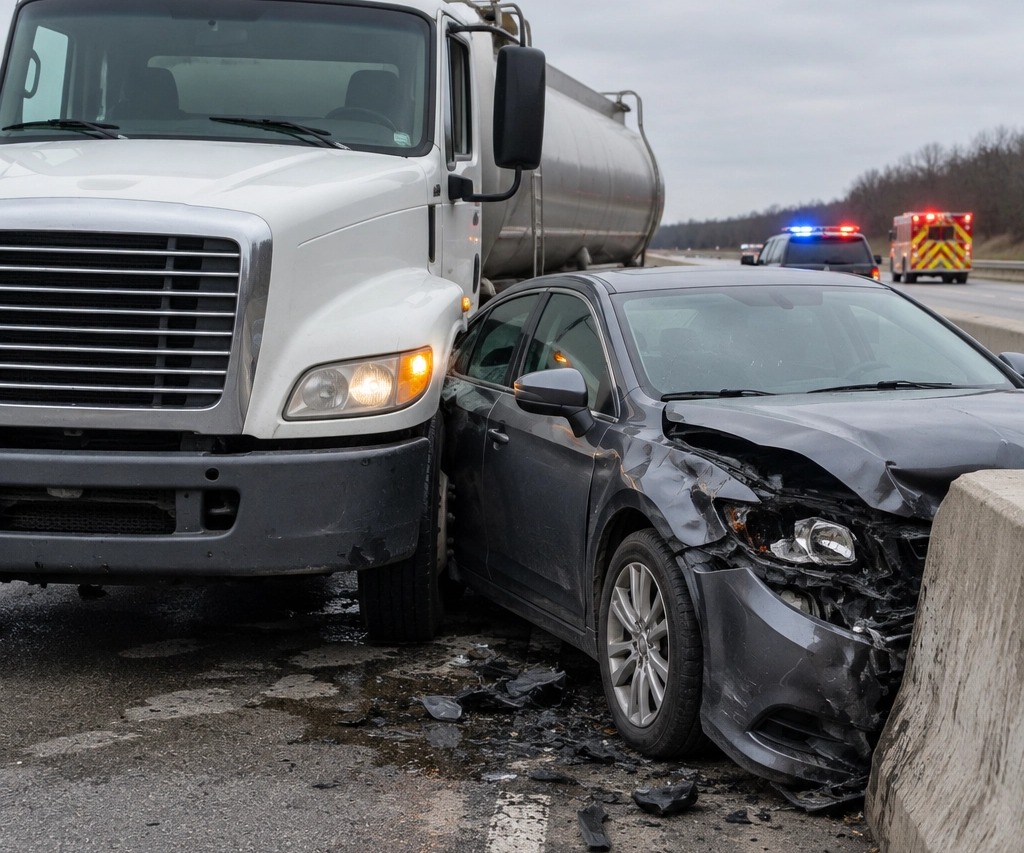
Here's the mechanism behind that exhibit. At the moment of a surge event, without Surge Busters, that energy transfers into the tank and truck components: frame, brakes, suspension, whatever's carrying the load. In a collision, part of that same energy transfers into whatever's struck. None of it disappears on impact.
Afterward, the transferred energy does dissipate, bleeding off gradually through the brakes, the tires, and the highway itself. But by then the damage from that first transfer is already done, and in a collision, so is the impact. With Surge Busters installed, the energy dissipates immediately, inside the liquid itself, before it ever reaches the chassis, the brakes, or whatever's on the other end of the impact.
The Truth Is...
Surge Busters eliminate 96.7%1 of liquid surge before it ever reaches your chassis or your brakes, the reduction measured in a University of Idaho test and applied here as an assumption across fill levels, liquids, and tank sizes.
No Accident Is Free
Not every accident is catastrophic. Most aren't. But every one has a cost, even the ones that never make the news. A fender-bender with a partially loaded tank still means a repair bill, a claim on your record, and a conversation with your insurance company you didn't want to have.
The size of the accident changes how much it costs you. It doesn't change whether it costs you.
The Environmental Cost
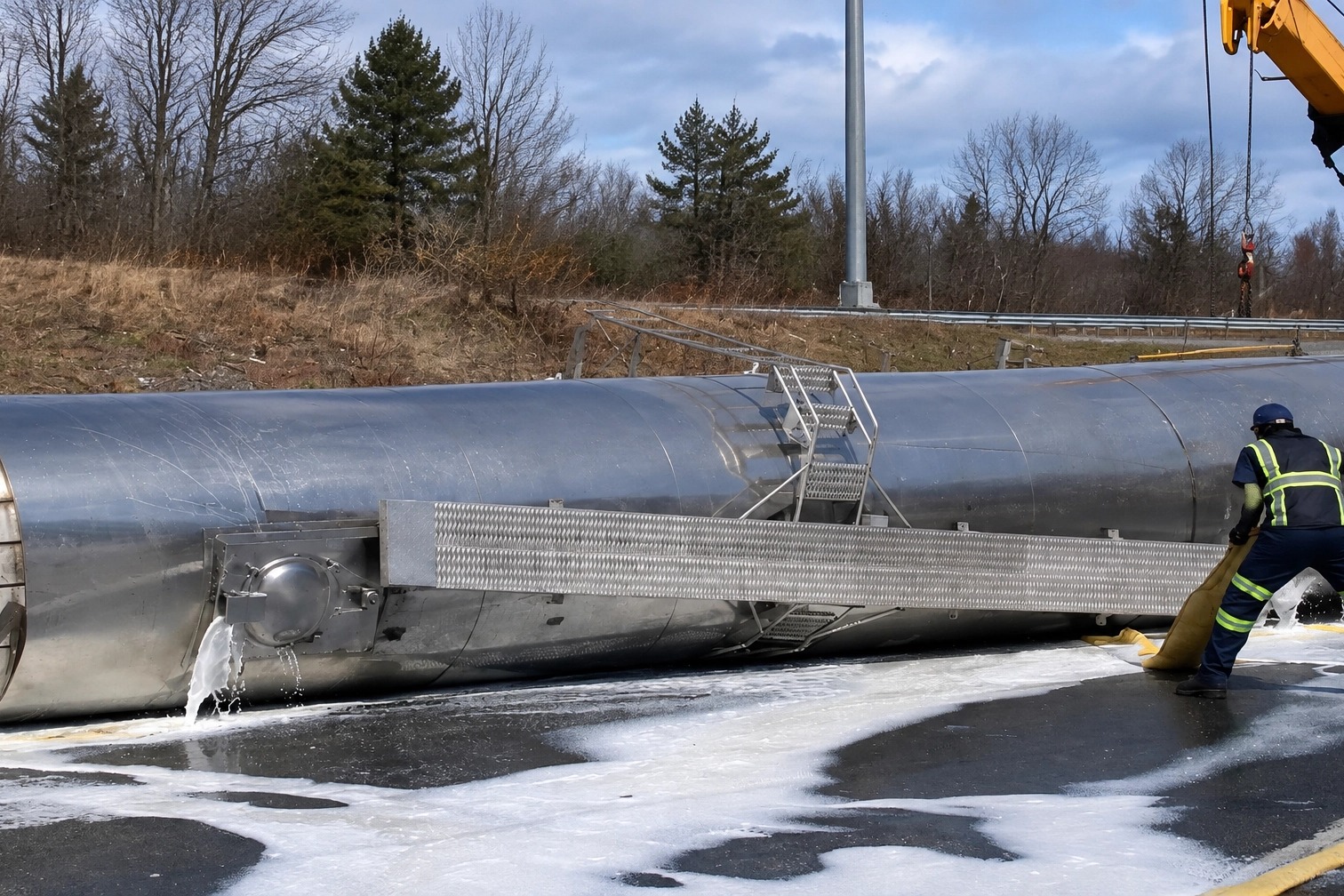
A hazmat spill doesn't end when the tank is upright again. The EPA gets involved. Cleanup is expensive even when no one is killed. In 2018, a fuel tanker rolled over in Enfield, Connecticut and spilled 2,600 gallons; the environmental cleanup took more than a week and cost half a million dollars.12 In 2021, a tanker rollover in Revere, Massachusetts spilled about 10,000 gallons of diesel, and officials said the cleanup could cost around $1 million.13 Larger releases push cleanup and remediation, soil, groundwater, whatever it reached, higher still, and that work can take far longer to finish, with your company on the hook for it the whole time. That liability doesn't stop at your insurance limits, and it doesn't stop when the spill itself is contained.
The Financial Cost
One event like that can end a company outright, on its own. But a company doesn't need a catastrophic environmental event to go under. A string of smaller accidents (which still can have a very significant financial impact) pushes your loss history further into the red, driving insurance premiums higher and making coverage harder to renew at any price, until the litigation and the premiums together do what a single rollover would have done outright.
The Legal Cost
Once that exhibit exists, the one described above, in a deposition or in front of a jury, the case stops being about whether the accident happened. It becomes about whether you could have prevented it and chose not to. That shifts everything: the settlement value, how hard your insurer fights the claim, and whether this becomes the case opposing counsel cites the next time. None of that resolves in weeks. Litigation like this runs months, usually years, with legal fees accruing the whole time, win or lose.

Reputation and Goodwill
A serious accident doesn't stay contained to the incident report. Customers ask questions. Insurers ask questions. And drivers, the ones you're trying to recruit and the ones you're trying to keep, ask questions too.
A company with a reputation for safety problems has a harder time hiring good drivers, a harder time keeping the ones it has, and a harder time winning the next contract against a competitor who doesn't carry that history. None of that shows up on the accident report. All of it shows up on the balance sheet, eventually.
The Human Cost
Every other cost on this page can be measured: a repair bill, a premium increase, a settlement. This one can't.
A serious accident touches a driver's family, coworkers who knew them, and a company that has to keep operating while carrying that weight. It's the cost nobody budgets for because there's no line item for it. It's also a core reason this page exists.
An Honest Limit
Surge Busters significantly reduce the risk that liquid surge causes or contributes to an accident. They don't prevent every accident, and they can't undo every consequence once one happens. No equipment can promise that.
What they can do is remove one specific, measurable risk, 96.7% of it as measured in the University of Idaho test, before it ever reaches your chassis or your brakes.
Common Questions
How much does Surge Busters reduce liquid surge force?
96.7%, measured in a University of Idaho test. That figure is then applied at other fill levels, liquids, and tank sizes as an assumption.
Does it work in every direction, or just front-to-back?
The cancellation math itself, floating elements oscillating out of phase and canceling each other's force, works the same way regardless of direction, that's the whole problem with welded baffles: they only address front-to-back movement, and do nothing for the side-to-side surge that happens during cornering, lane changes, and evasive maneuvers. The 96.7% figure is what that math produced in the University of Idaho test, measured fore-to-aft. The exact percentage of side-to-side force has not been separately measured.
Ready to Get Started
Beyond the 96.7%: Five More Ways This Pays Off
Driver retention, operational safety, transport capacity, maintenance, and ROI: five ways Surge Busters affect your bottom line beyond surge force itself.
Read the 5 Hidden Profit Points →→ See the fix: The Liquid Surge Advantage
Get Surge Busters →