
What This Works With
Surge doesn't care what kind of liquid is in the tank. It depends on how full the tank is and how heavy the liquid is. Fuel, chemicals, water, and construction hauling all generate real surge force. There's one real exception, worth knowing about upfront.
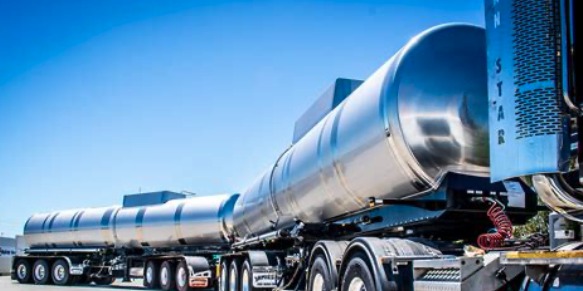
The Numbers, Whatever You're Hauling
Surge force depends on fill level and liquid weight, not on the type of liquid. It is force your brakes must arrest on every stop, on top of the truck's own weight, whether the liquid is fuel oil or water.
fuel oil, surge force at 52.5% fill, the level where the calculator shows surge force peaking
water, surge force at 52.5% fill, the same number at 40 mph or 70 mph, since surge force during braking is friction-limited, not speed-limited
UAN fertilizer, surge force at 52.5% fill. A denser liquid means more surge force in the same tank
These figures come from the Braking Surge Force Calculator for a 6,000-gallon tank on wet asphalt (friction 0.60). They are estimates for education and planning.
In the University of Idaho test, Surge Busters reduced surge force by 96.7%. The calculator applies that same reduction at every fill level, liquid, and tank size, as an assumption.
Beyond Fuel & Chemical
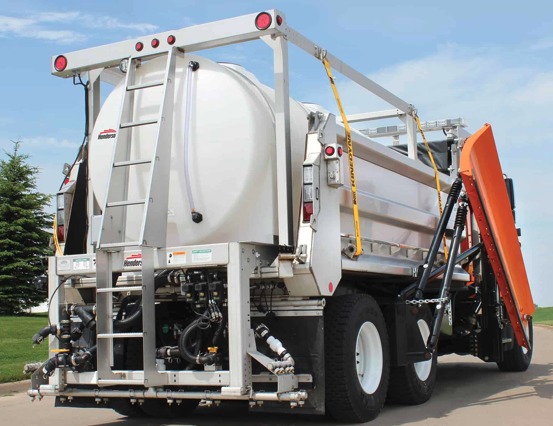
Surge force doesn't care about your industry, only your fill level. Fleets already running Surge Busters include fuel and chemical haulers (diesel, fuel oil, and other compatible liquids, not gasoline), construction and engineering fleets, water haulers, fire apparatus and forest service water tenders, and liquid loads on boats and aircraft.
→ See the complete formula and the full data table: Surge Force in Fuel & Chemical Tankers
Water & Construction: No Special Compliance Framing Needed
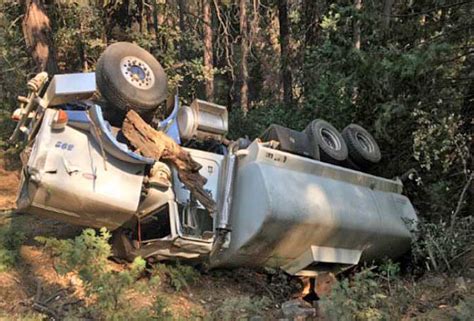
It's easy to assume surge force is a hazmat concern, something that matters for fuel and chemical fleets, not for a truck hauling nothing more dangerous than water. That assumption is wrong, as the numbers above show. Unlike fuel and chemical hauling, though, water and construction liquid loads don't carry the same regulatory compliance questions. This is a physics and cost case, not a specific standard.
Trailer-Mounted Tanks: Nurse Tanks, Water Tenders, and More
Not every liquid load rides in an integrated cargo tank body. Poly and fiberglass tanks strapped to a trailer, single tanks or multiple tanks side by side, purpose-built flatbed tender trailers, show up everywhere from fertilizer application to water hauling, often behind a pickup truck rather than a semi. These vessels aren't candidates for welded baffles, but Surge Busters install in them just as easily as in an integrated tank, no welding, no structural modification.
→ See the full application: Trailer-Mounted Tanks
Compatibility
Material: virgin HD polypropylene, rated to 175°F, drop-in installation, no welding or tank modification.
| Liquid Type | Compatible |
|---|---|
| Fuel oil, diesel, DEF | Yes |
| Many common chemicals | Yes |
| Anhydrous ammonia / other pressurized liquids | No, pressurized tanks not compatible |
| Automotive gasoline | No, incompatible at any temperature |
| Avgas / jet & turbine fuel | Caution, do not exceed 140°F (60°C) |
Avgas and jet/turbine fuel are aromatic hydrocarbon blends. They aren't paraffinic like diesel or fuel oil, and polypropylene doesn't hold up the same way against them.
Tested resistance is good at 68°F (20°C). At 140°F (60°C), it drops to fair, not recommended for continuous use. That's the line. Normal transport temperatures stay well below it.
Automotive gasoline is different. It fails outright, at any temperature, due to additives.
Source: HMC Polymers Chemical Resistance Guide, ASTM D543, 1-month immersion.
For chemical compatibility, refer to the Polypropylene Compatibility Chart.
What This Costs
Here's the math, worked through for a standard case:
Take a standard 6,000-gallon tank hauling water. Water needs one Surge Buster for every 30 gallons, so that's 200 units. At full retail, $39.95 each, that's $7,990 for the units themselves, not including installation or shipping. Spread across the 15-year service life these units are built for, that's about $533 a year. Less than $1.50 a day. Think of it as a risk management strategy.
That's full retail, not fleet pricing. Fleet purchases can run closer to half that per unit. Heavier liquids and larger tanks need more units, so the exact math changes with the job. But even at the highest price a customer would ever actually pay, the number works.
This isn't a marketing estimate. It comes from the person who patented the system, and who answers the phone directly when a fleet safety director has questions about it. Contact us for the exact numbers on your specific tank and liquid.